Table of contents
- What Is an ADA-Compliant Kiosk for Public Safety?
- ADA Accessibility Standards for Public Safety Lobby Kiosks
- TTY and ASL Emergency Calls: Reaching Deaf Citizens When It Matters Most
- Multilingual Support: Serving Your Community in their Language
- Accessible Hardware: A Kiosk Every Visitor Can Actually Use
- Around-the-Clock Access: Inclusive Service Doesn’t Stop at 5 p.m.
- What to Look for in an Inclusive Public Safety Kiosk
- How ALICE Receptionist Supports Inclusive Public Safety Service
- Ready to Deploy ADA Compliant Kiosks?
- Frequently Asked Questions About ADA-Compliant Kiosks
- What is TTY and how does it work on a public safety kiosk?
- Can a public safety kiosk support deaf visitors when the station is unstaffed?
- How does ASL video interpreting work on a lobby kiosk?
- What languages can an ADA-compliant emergency services kiosk support?
- Are public safety kiosks suitable for small or rural stations?
- Ready to Serve Every Citizen Who Walks Through Your Doors?
Picture a deaf resident arriving at a police station late at night. The front desk is unstaffed. There’s no way to reach dispatch, no interpreter available, and no clear path to the help they came for. They leave without it. For police and fire departments committed to serving their communities, that scenario is unacceptable, yet increasingly avoidable.
For public safety agencies, accessibility and language inclusion are not edge cases. They represent a significant portion of the communities served. According to the CDC, approximately 1 in 4 adults in the United States lives with some type of disability. U.S. Census Bureau data shows that about 22% of people ages 5 and older — roughly 68 million residents — speak a language other than English at home.
Understanding ADA kiosk requirements helps departments avoid accessibility gaps while maintaining equal access to public services.
A public safety kiosk in your station lobby can bridge that gap, but only when it’s built to serve every citizen who walks through the door, regardless of how they communicate.
Here’s how the right ADA-compliant kiosk makes your station accessible to the full range of people in your community, from deaf and hard-of-hearing residents to non-English speakers and citizens with mobility limitations.
What Is an ADA-Compliant Kiosk for Public Safety?
An ADA-compliant kiosk is a self-service or video-enabled access station designed to meet the requirements of the Americans with Disabilities Act (ADA). In police and fire stations, ADA compliance includes physical accessibility standards such as appropriate screen height and wheelchair reach ranges, as well as communication accommodations like TTY functionality, captioned content, multilingual support, and live ASL interpretation. These features ensure that every visitor can independently access emergency and non-emergency services.
ADA Accessibility Standards for Public Safety Lobby Kiosks
Police and fire stations are public entities covered under Title II of the Americans with Disabilities Act (ADA), which requires equal access to public services. When installing a lobby kiosk, departments must consider both physical accessibility and effective communication.
ADA kiosk requirements typically include accessible hardware placement for wheelchair users and effective communication accommodations such as captioned content, TTY functionality, or video interpretation.
Because ADA compliance is context-specific, departments should consult legal counsel or ADA compliance specialists when evaluating accessibility requirements.
TTY and ASL Emergency Calls: Reaching Deaf Citizens When It Matters Most
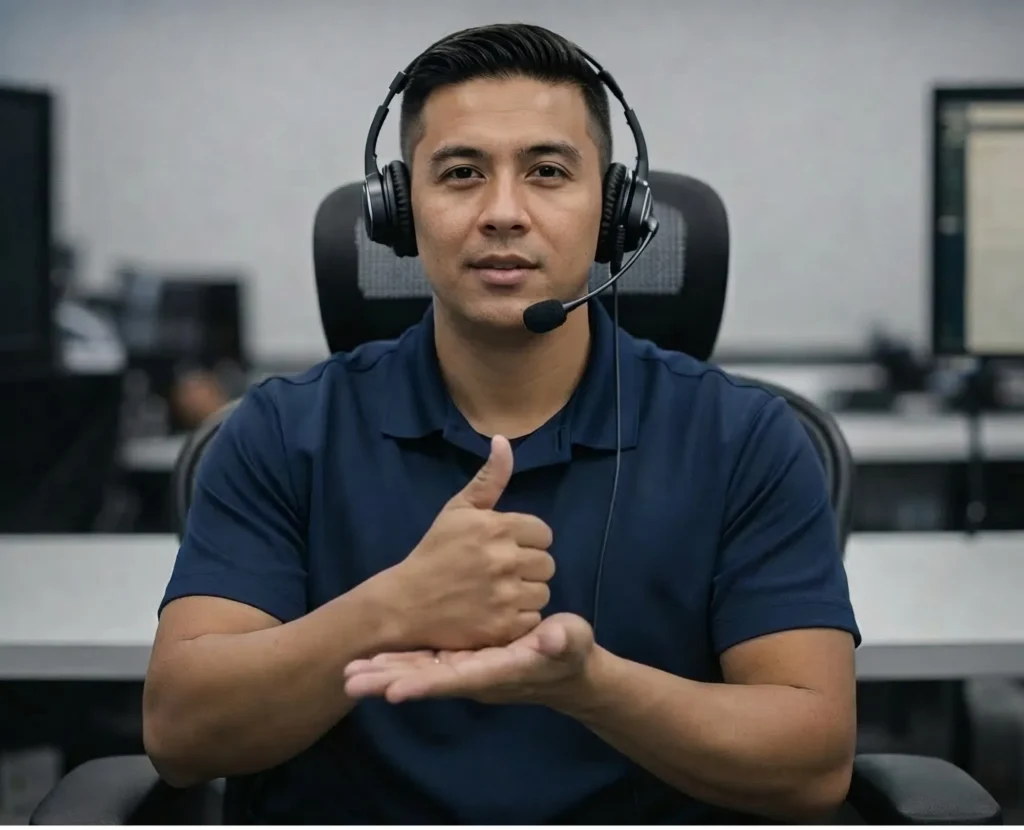
TTY enables text-based communication with 911 dispatch for those who prefer or require it. Live ASL video interpreting connects American Sign Language users face-to-face with a remote interpreter in real time. Both are available around the clock without any staff on site.
Captioned video content within the kiosk interface extends this further, ensuring on-screen instructions and service information are equally accessible to deaf and hard-of-hearing users navigating the system on their own.
Multilingual Support: Serving Your Community in their Language
When residents need to interact with police or fire services, especially in a stressful or urgent situation, a language barrier isn’t just an inconvenience. It’s a real obstacle to getting help.
A public safety kiosk with multilingual support lets citizens navigate services, connect with remote staff, and access public safety information in their preferred language. For departments that pride themselves on community relationships, that capability signals this station is here for everyone.
Accessible Hardware: A Kiosk Every Visitor Can Actually Use
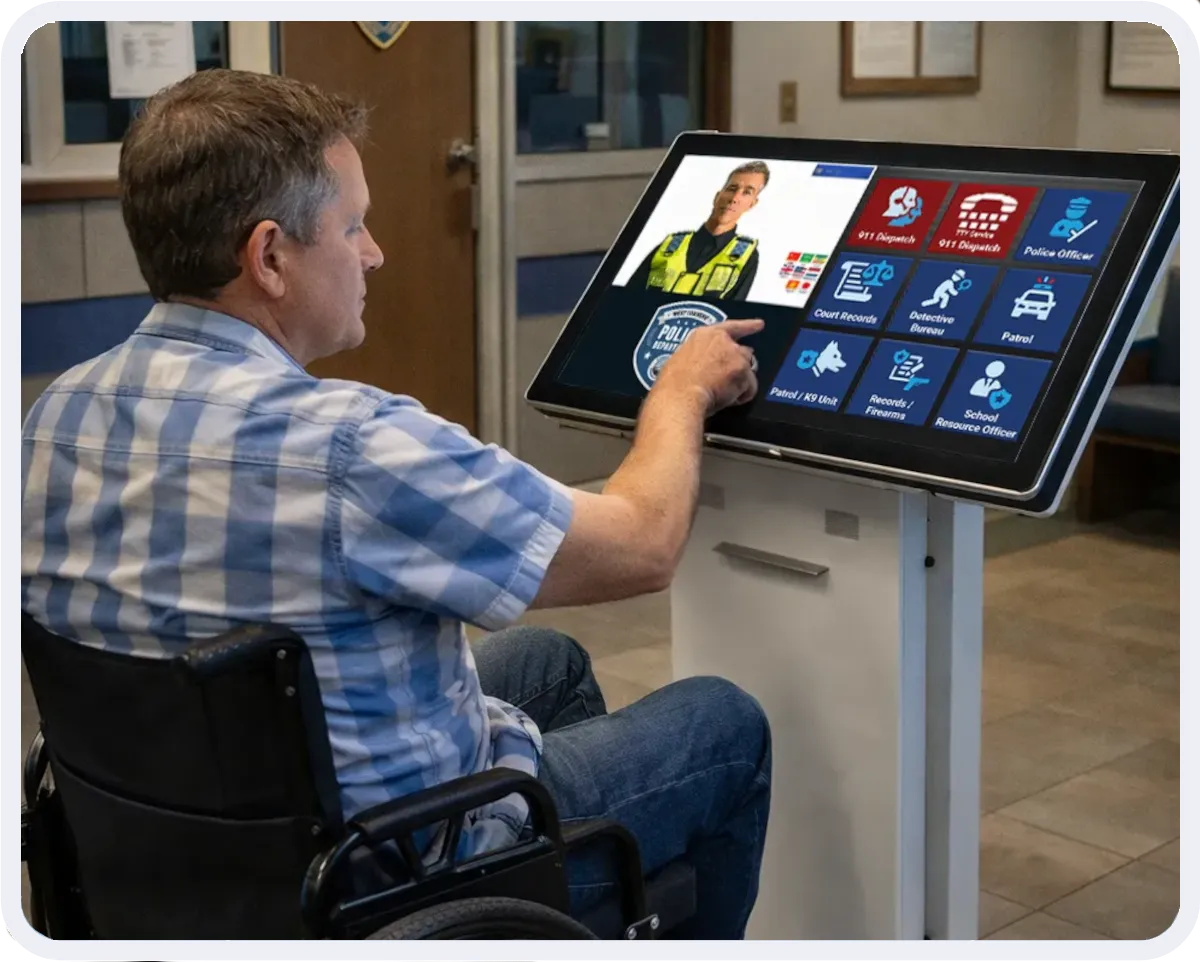
Inclusive service starts with physical access. A kiosk that a wheelchair user cannot reach or operate fails before a single interaction begins. That’s why hardware matters as much as software when evaluating a 24/7 access kiosk for your station lobby.
Departments should look for kiosk solutions with accessible screen heights and placement in mind. Every citizen who enters your lobby should be able to use the kiosk independently.
Around-the-Clock Access: Inclusive Service Doesn’t Stop at 5 p.m.
One of the most overlooked dimensions of inclusive public safety service is time. A station that offers ASL interpreting and multilingual support during staffed hours, but nothing after hours, still leaves a large segment of its community without access when they need it most. An accessible visitor kiosk extends the full range of services to every hour of the day.
For satellite and rural stations with limited staffing, this kind of around-the-clock inclusive access is a core part of fulfilling the department’s mission to the people it serves.
What to Look for in an Inclusive Public Safety Kiosk
When evaluating a public safety kiosk for your station lobby, these are the accessibility features that determine whether every citizen in your community can be served:
- Accessible hardware that meets ADA accessibility for wheelchair users
- TTY-enabled emergency calls so deaf and hard-of-hearing citizens can reach 911 dispatch directly
- Live ASL video interpreting with dispatch, remote officers, or staff
- Captioned video content within the kiosk interface for deaf and hard-of-hearing users
- Multilingual translation so non-English speaking citizens can navigate services in their preferred language
How ALICE Receptionist Supports Inclusive Public Safety Service
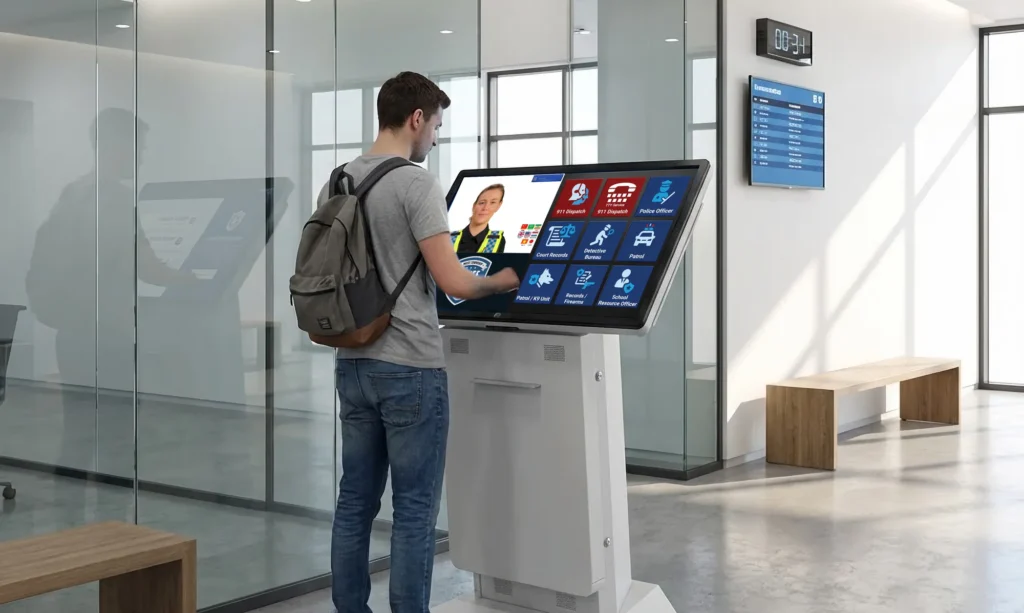
The ALICE Public Safety Kiosk is built around the idea that every citizen deserves access to emergency and non-emergency services, regardless of how they communicate or move through the world. ALICE supports one-touch 911 dispatch calls, TTY-enabled emergency communications, live ASL video interpreting, captioned video content, and multilingual translation, all available around the clock from your station lobby.
ALICE offers ADA accessible kiosk hardware built with durable, enterprise-grade hardware designed for public safety environments.
In 2025, ALICE Receptionist was recognized with the GOVIES Award for improving government security, accessibility, and citizen experience.

Book a Demo
Ready to Deploy ADA Compliant Kiosks?
ALICE Receptionist provides comprehensive features for ADA kiosk compliance including wheelchair-accessible deployment options, on-demand ASL interpretation, TTY support, and integration with your existing communication systems.
Learn more about how ALICE creates ADA-compliant kiosks, or schedule a demo to see accessible visitor management in action.
Frequently Asked Questions About ADA-Compliant Kiosks
What is TTY and how does it work on a public safety kiosk?
TTY (teletypewriter) is a text-based communication system that lets deaf and hard-of-hearing users send and receive messages in place of a voice call. On an ADA-compliant emergency kiosk, TTY is integrated directly into the interface so citizens can initiate a text-based emergency call to 911 dispatch with a single tap.
Can a public safety kiosk support deaf visitors when the station is unstaffed?
Yes. A kiosk with TTY emergency calling and live ASL video interpreting operates independently of on-site staff. Deaf visitors can reach 911 dispatch via TTY or connect with a remote ASL interpreter for non-emergency needs at any hour, making the lobby fully functional even when no officers are present.
How does ASL video interpreting work on a lobby kiosk?
The kiosk connects the visitor via live video to a remote ASL interpreter. The interaction requires no scheduling or advance notice from citizens. Simply select the ASL option from the kiosk menu and you are connected immediately.
What languages can an ADA-compliant emergency services kiosk support?
The languages available depend on your configuration. ALICE Receptionist supports multilingual translation so citizens can navigate services and access public safety information in their preferred language. Departments serving communities with significant non-English speaking populations can configure the kiosk to reflect the languages most common in their area.
Are public safety kiosks suitable for small or rural stations?
Particularly so. Smaller and rural stations often operate with limited staffing or reduced front desk hours, which makes 24/7 kiosk access especially valuable. Remote communication features like live video calls to off-site officers and one-touch 911 dispatch allow these stations to maintain full service availability without requiring staff on site around the clock.
Ready to Serve Every Citizen Who Walks Through Your Doors?
Your station lobby is often the first point of contact between your department and the community. A public safety kiosk that serves every citizen regardless of ability, language, or the hour they arrive, sends a clear message about the kind of department you are.
To learn more about how ALICE delivers inclusive, 24/7 access for police and fire station lobbies, visit our Public Safety Kiosk page or schedule a discovery call with our team below.