Table of contents
- Why are police station lobbies closing after hours?
- What happens when a lobby call box sends everything to dispatch?
- What do residents actually need from a police lobby?
- How can a small police department keep its lobby open 24/7 without adding staff?
- See ALICE’s Police Lobby Kiosks in Action
- Frequently Asked Questions
In many towns, the after-hours police lobby runs on a single call box or phone. A resident walks in, picks it up, and reaches dispatch. That keeps the lobby reachable. However, it also sends every walk-in request, routine or urgent, to the people answering 911.
For police chiefs and town councils, an unstaffed front desk is a familiar trade-off. Staffing the front desk around the clock costs money or patrol coverage. A call box costs little, but it quietly shifts the work to dispatch. This guide covers why departments land on the call box, what it costs dispatch, and how a virtual front desk offers a middle path.
Why are police station lobbies closing after hours?
Many departments close their lobbies overnight because staffing them means hiring civilian staff or pulling officers off patrol. As a result, the debate often plays out in public.
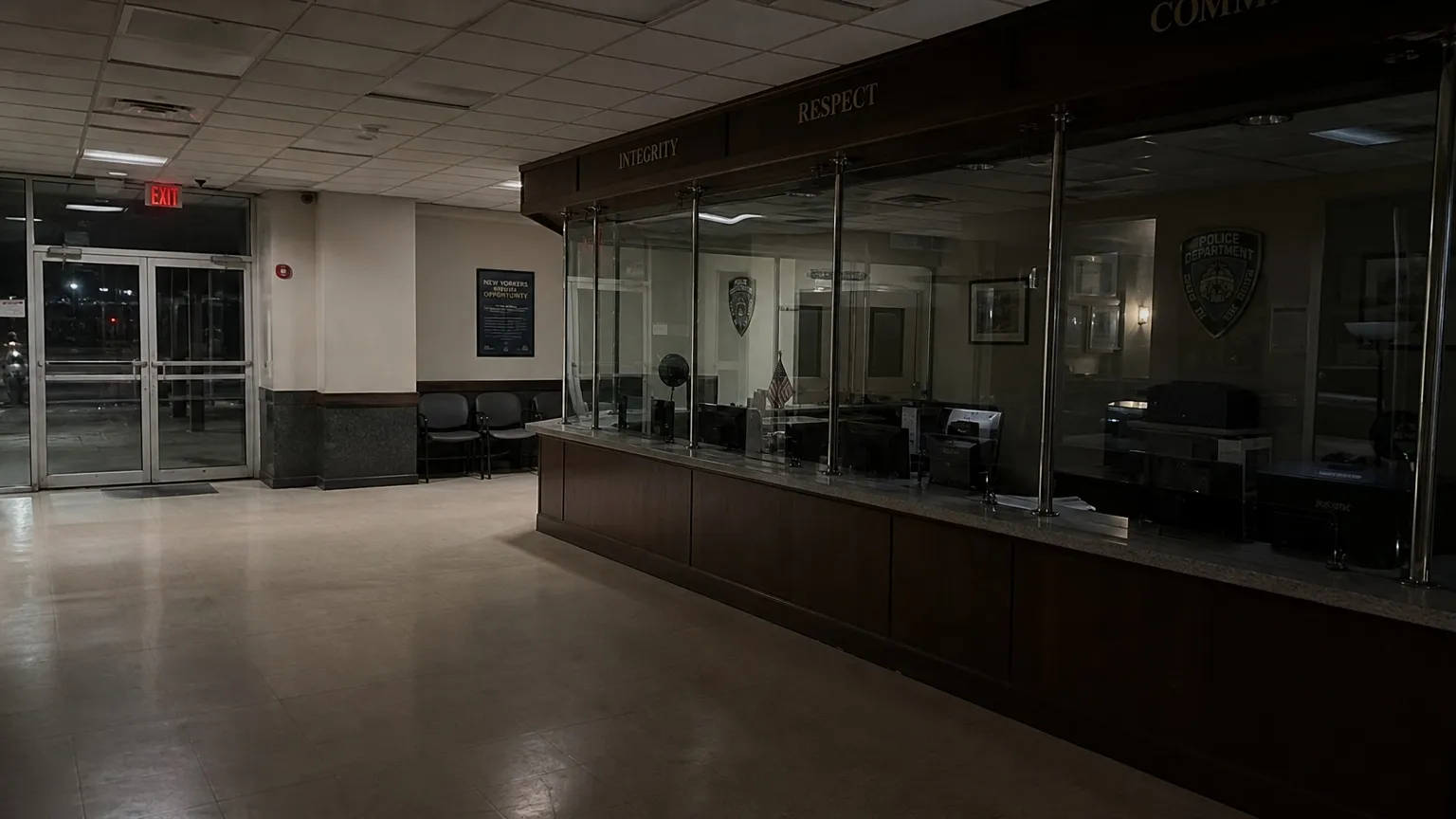
For example, in Bernards Township, New Jersey, residents told the Township Committee that the police station lobby was closed overnight with no phone or button to reach police. Township leaders explained that staffing the lobby would mean hiring new officers or taking someone off patrol, away from where they were needed. The department chose to install an exterior call box so visitors could reach dispatch. Similarly, the University of Nebraska–Lincoln Police Department placed a lobby phone that connects to dispatch during unstaffed overnight hours.
The pattern is consistent. When a department can’t staff the desk, the fallback is a device that rings dispatch.
What happens when a lobby call box sends everything to dispatch?
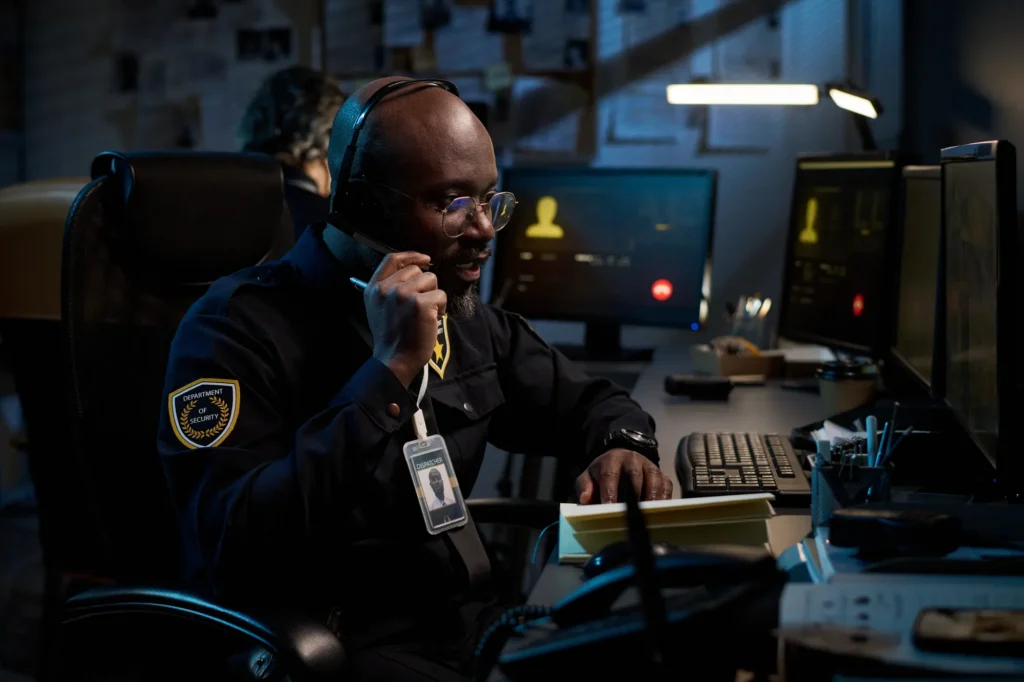
A lobby call box connects visitors to dispatch, but it can’t tell dispatch why they came. Instead, every request arrives the same way, as an unidentified call from the lobby.
That creates real friction in the dispatch center. Telecommunicators are already juggling 911 calls, radio traffic, and officer requests, so a lobby call adds one more line to answer and triage. Public safety communications professionals raise this problem often at industry events like regional APCO conferences. We heard it firsthand at APCO Atlantic 2026.
The call box has three built-in limits:
- No routing. A person asking for a report copy and a person reporting a crime both reach the same dispatcher.
- No context. Dispatch learns the reason for the visit only after answering, which takes time away from emergency calls.
- No resolution. For routine requests, the dispatcher often can only tell the visitor to come back during business hours.
The result is wasted time for dispatch and frustration for residents. In other words, an unstaffed front desk stays reachable, but the work it creates lands on the busiest team.
What do residents actually need from a police lobby?
Many people who walk into a police lobby after hours are not in danger. Instead, they usually need help with a routine task that a records clerk, an on-call officer, or a scheduled appointment could handle.
Common reasons for a lobby visit include:
- Requesting a copy of a police or accident report
- Asking about a records request or a case status
- Dropping off paperwork or found property
- Filing documentation for a complaint or report
Emergencies do happen, and they must reach dispatch immediately. Still, they are the exception, not the rule. When a lobby system can tell the difference, routine requests stop competing with emergencies for the same dispatcher’s attention.
How can a small police department keep its lobby open 24/7 without adding staff?
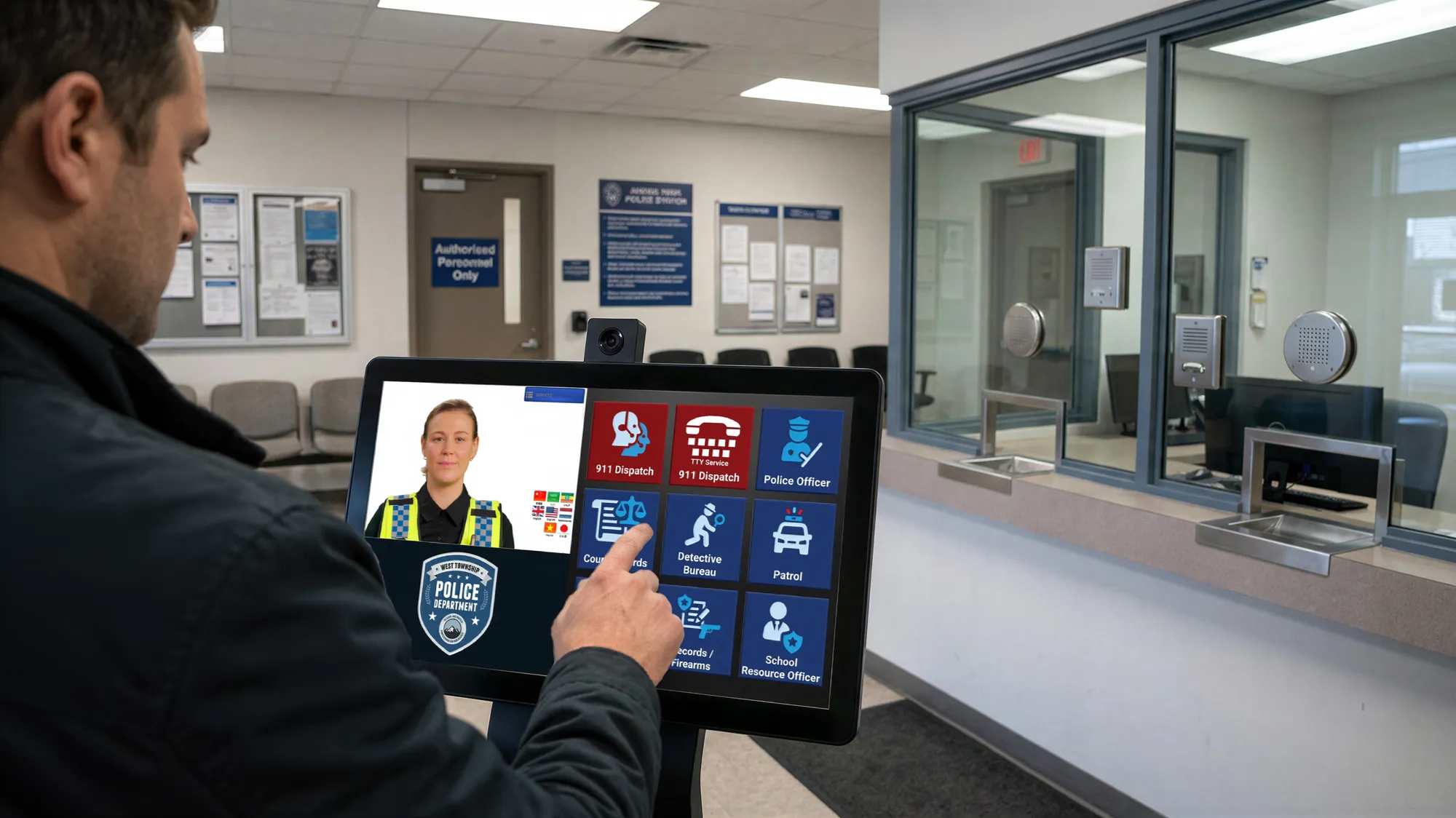
A small department can keep its lobby open around the clock by pairing a secure lobby with a virtual front desk, sometimes called a police lobby kiosk or public service kiosk. That way, visitors get a real response, routine requests reach the right person, and dispatch only hears about true emergencies.
Most departments weigh three options:
| Staffed front desk | Call box or intercom | Virtual front desk | |
|---|---|---|---|
| After-hours coverage | Full, if fully staffed | Contact only | Full, with remote staff |
| Estimated cost | $160,000 to $220,000+ per year; 24/7 coverage takes more than 4 full-time positions at $40,000 to $55,000 each | About $1,500 one-time, installed, for audio-only units | $3,588 per year ($299 per month, billed annually) |
| Routing by visitor need | Yes | No | Yes |
| Impact on dispatch | Low | High | Low |
| Accessibility | Depends on staff and interpreter availability | Often voice only | Video, including ASL interpretation |
| Patrol coverage | Protected only if civilians staff it | Protected | Protected |
A staffed desk delivers the best in-person experience, but few departments can fund it around the clock. On the other hand, a call box protects patrol and the budget, yet pushes the workload onto dispatch. Meanwhile, a virtual front desk sits between the two, giving residents a real response without adding headcount or 911 traffic.
What does a virtual front desk change for dispatch and patrol?
A virtual front desk for police stations replaces the single call route with a directory that connects visitors to the right staff. As a result, the lobby stays responsive, and dispatch stays focused on emergencies.
Here is how it typically works after hours. First, the visitor enters the lobby and is greeted by the virtual front desk using motion detection. Then, they choose the option that fits their need:
- If their need is an emergency, they can select the dispatch option to speak with dispatch, including through an ASL interpreter.
- Routine requests connect to the right person, such as records staff or an on-call officer, by video or voice.
- If they prefer self-service, such as a records request or a vehicle incident report, the system can open forms, provide information, or give instructions.
For dispatch, these options mean fewer unidentified lobby calls and less time spent on administrative requests. Patrol benefits too, since no officer is pulled inside to cover the desk. Meanwhile, residents get faster, more accurate service at any hour.
What still needs a person?
A virtual front desk connects visitors to the people and services they need. However, it does not replace officers, dispatchers, or records staff.
Emergencies still go straight to dispatch. Likewise, complaints, sensitive matters, and anything that needs judgment still reach an officer or trained staff member.
The exception is informational requests. Tasks like requesting records or a vehicle incident report can be handled through self-service, with no staff time needed.
With a virtual front desk, every visitor reaches the right place the first time. Dispatchers stay focused on emergencies, officers stay on patrol, and residents feel safe walking through the door.
See ALICE’s Police Lobby Kiosks in Action
Is your department facing reduced front desk hours, lobby security concerns, or ADA accessibility requirements? We would love to show you how a police lobby kiosk can help.
Frequently Asked Questions
Patrol and dispatch already run around the clock, so the lobby is usually the gap. Departments keep lobby services available after hours in one of three ways. They staff the front desk, route visitors through a call box to dispatch, or use a virtual front desk that connects visitors to the right person without adding staff or 911 traffic.
A call box or intercom gives visitors a way to reach someone, but it routes every visit to dispatch. It works for emergencies. For routine requests, it adds work for dispatchers without resolving the visitor’s need.
When the lobby stays open without staff, departments usually secure the interior doors so visitors can’t go past the lobby. Security cameras, good lighting, and an emergency line to dispatch cover the space itself. A virtual front desk adds a live connection to a person, so visitors are never left alone in an empty room.
No. It routes visitors to the right person and handles routine intake. Officers and dispatchers still make every decision that requires judgment.
Smart police station kiosks focus on self-service transactions, such as forms, payments, and records requests. A virtual front desk also offers self-service options, but its focus is connecting visitors to the right person and keeping routine requests away from dispatch.
Councils should weigh after-hours coverage, staffing costs, impact on patrol, dispatch workload, lobby security, and how residents will be informed. Asking dispatch how many lobby calls they handle is a useful first step.
In most cases, yes. It typically needs a lobby screen and a network connection, not a remodel. That makes it practical for older buildings as well as new construction.
The most effective step is routing lobby visitors before they reach dispatch. A virtual front desk sends routine requests, like records or report copies, to the right staff or to self-service. As a result, only true emergencies reach the 911 center.
Yes. A virtual front desk can connect deaf or hard-of-hearing visitors to an ASL interpreter by video, which a voice-only call box can’t do. That helps departments communicate effectively with every visitor, even when the lobby is unstaffed.