Table of contents
- Why APCO Atlantic Matters to Dispatchers
- What Is a Police Lobby Kiosk?
- How Can Deaf and Hard-of-Hearing Visitors Reach Dispatch at a Police Station?
- What We Heard From Dispatchers
- A Customer Perspective From Nashoba Valley
- Honoring Chapter History With an Information Kiosk
- Thank You, APCO Atlantic
- See ALICE’s Police Lobby Kiosks in Action
- Frequently Asked Questions
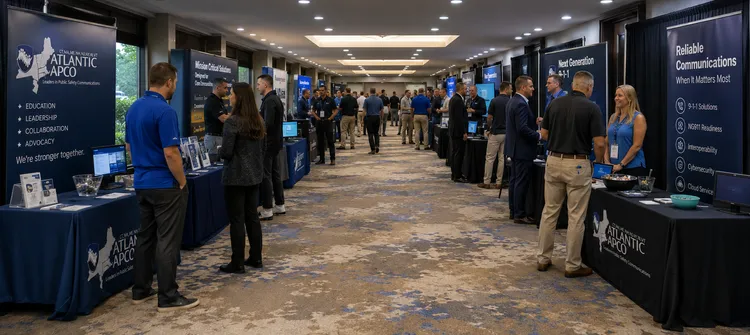
The 2026 APCO Atlantic Conference brought public safety communications professionals from across the Northeast to Parsippany-Troy Hills, New Jersey, from September 27 to 30, 2026. ALICE Receptionist was there to demonstrate our police lobby kiosk and to help the chapter honor its history.
A police lobby kiosk gives walk-in visitors a direct line to 911 dispatch or an on-call officer, even when no one is staffing the front desk. It handles emergencies and everyday requests alike.
We showed dispatchers how this kind of public safety kiosk works and listened to the challenges facing their lobbies. We also helped celebrate the leaders who built the chapter.
Why APCO Atlantic Matters to Dispatchers
The Atlantic Chapter of APCO was chartered in August 1966. It represents emergency communications professionals in Connecticut, Massachusetts, Maine, New Hampshire, New Jersey, New York, Rhode Island, and Vermont.
Its annual conference exists for one reason: to give the people who answer the call a chance to learn, connect, and recharge. This year’s program covered personal growth, leadership, technology, and wellness, along with discussion panels.
Dispatchers spend their shifts helping others through the worst moments of their lives, often with little recognition. Events like this one give them dedicated time to sharpen their skills, compare notes with peers from other centers, and focus on their own wellbeing. For vendors like us, it is a chance to listen to the people our technology is meant to support.
What Is a Police Lobby Kiosk?
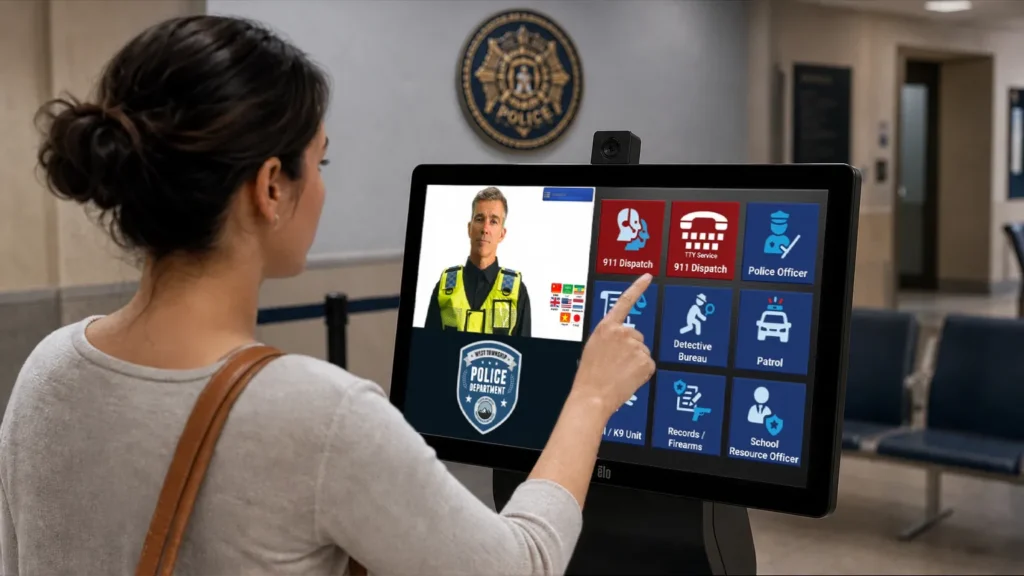
A police lobby kiosk is a self-service station in a police or fire station lobby that connects walk-in visitors to 911 dispatch or an on-call officer by video or voice. It works without a staffed front desk, much like the kiosks people already use at the DMV or post office, but it is built for public safety.
A typical police lobby kiosk includes:
- Touchscreen: Visitors choose why they are there, such as reporting an emergency, filing a report, or picking up paperwork. The kiosk then connects them to the right service right away.
- Direct connection: Visitors can talk directly with a dispatcher, an officer, or a staff member.
- Accessibility support: ASL interpretation and multilingual support help make sure the widest range of community members can be served.
- Durable enclosure: Hardware built for indoor lobbies or outdoor entrances that stay open around the clock.
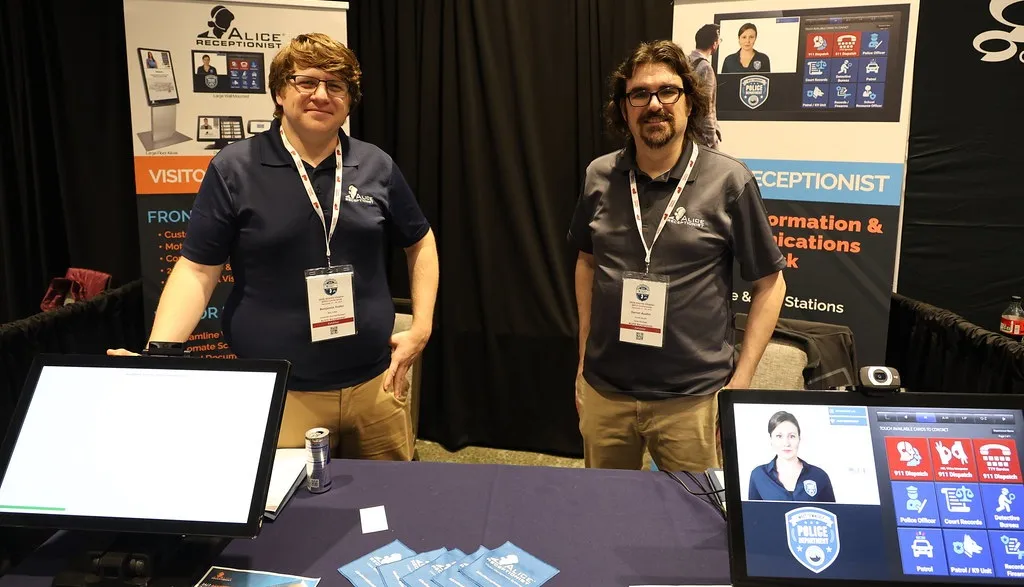
At our booth, attendees saw a simulation of the ALICE Receptionist police lobby kiosk in action. A visitor walks up, taps the screen, and is talking with a dispatcher within moments.
How Can Deaf and Hard-of-Hearing Visitors Reach Dispatch at a Police Station?
Deaf and hard-of-hearing visitors can reach dispatch through a kiosk that connects them to a live ASL interpreter by video or to a dispatcher by TTY.
This was the part of our demo that resonated most with attendees. Under the Americans with Disabilities Act (ADA), public agencies must communicate effectively with people with disabilities, and that includes walk-in visitors. Beyond compliance, it is simply the right thing to do: every resident deserves a reliable way to ask for help.
What We Heard From Dispatchers
The best part of any conference is the conversations. Three questions came up again and again.
How Should Police Stations Route Walk-In Visitors?
Police stations should route each walk-in visitor to the right person based on why they came. Many stations still rely on a lobby doorbell or wall-mounted handset. These ring in one place, offer no context, and often reach a dispatcher who is already handling active emergencies.
A kiosk sorts visitors from the start. Emergencies go straight to 911 dispatch. Records questions, paperwork pickups, and other everyday requests go to the right staff member. That keeps the dispatch floor focused on urgent calls and gets the person in the lobby help faster.
How Can Police Stations Keep Lobby Staff Safe?
Police stations can keep lobby staff safe by letting visitors make contact through a kiosk while staff stay behind secured doors or glass. Public safety lobbies are open to everyone, including people who may be agitated, intoxicated, or dangerous.
With a kiosk, staff can see and speak with a visitor before anyone opens a door. The kiosk can also work with the station’s access control system, so staff can verify a visitor before releasing a secured door.
What Can Police Departments Do When Front Desk Hours Are Cut?
When front desk hours are cut, police departments can use a self-service kiosk, sometimes called a virtual receptionist, to keep the lobby functional around the clock. More departments are reducing or eliminating receptionist hours because of budget pressure and staffing shortages. Residents still show up to report incidents, pick up paperwork, or ask for help.
A kiosk makes sure they always have a way to reach someone. It works alongside existing staff during business hours and covers the lobby when no one is at the desk. Learn more about visitor management for government agencies.
A Customer Perspective From Nashoba Valley
We were glad to see Anne Camaro, Executive Director of the Nashoba Valley Regional Dispatch District (NVRDD), at the conference. NVRDD and its member departments use ALICE to connect lobby visitors with dispatch, and Anne has described the impact this way:
“ALICE Receptionist has helped NVRDD and its member departments bridge an important communication gap between the deaf and hard of hearing community and public safety. It provides an accessible and reliable way for individuals to connect with dispatchers when they arrive at a police station, especially in smaller towns where staffing a front desk 24/7 simply isn’t feasible. It has enhanced equity in access to emergency and public safety services, ensuring that all members of the community, regardless of hearing ability, have a reliable way to seek help and communicate with first responders.”
Anne Camaro, Executive Director, Nashoba Valley Regional Dispatch District
Her words capture exactly what we heard on the exhibit floor. Agencies want every resident to have a dependable way to get help, whether or not someone is at the front desk.
Honoring Chapter History With an Information Kiosk
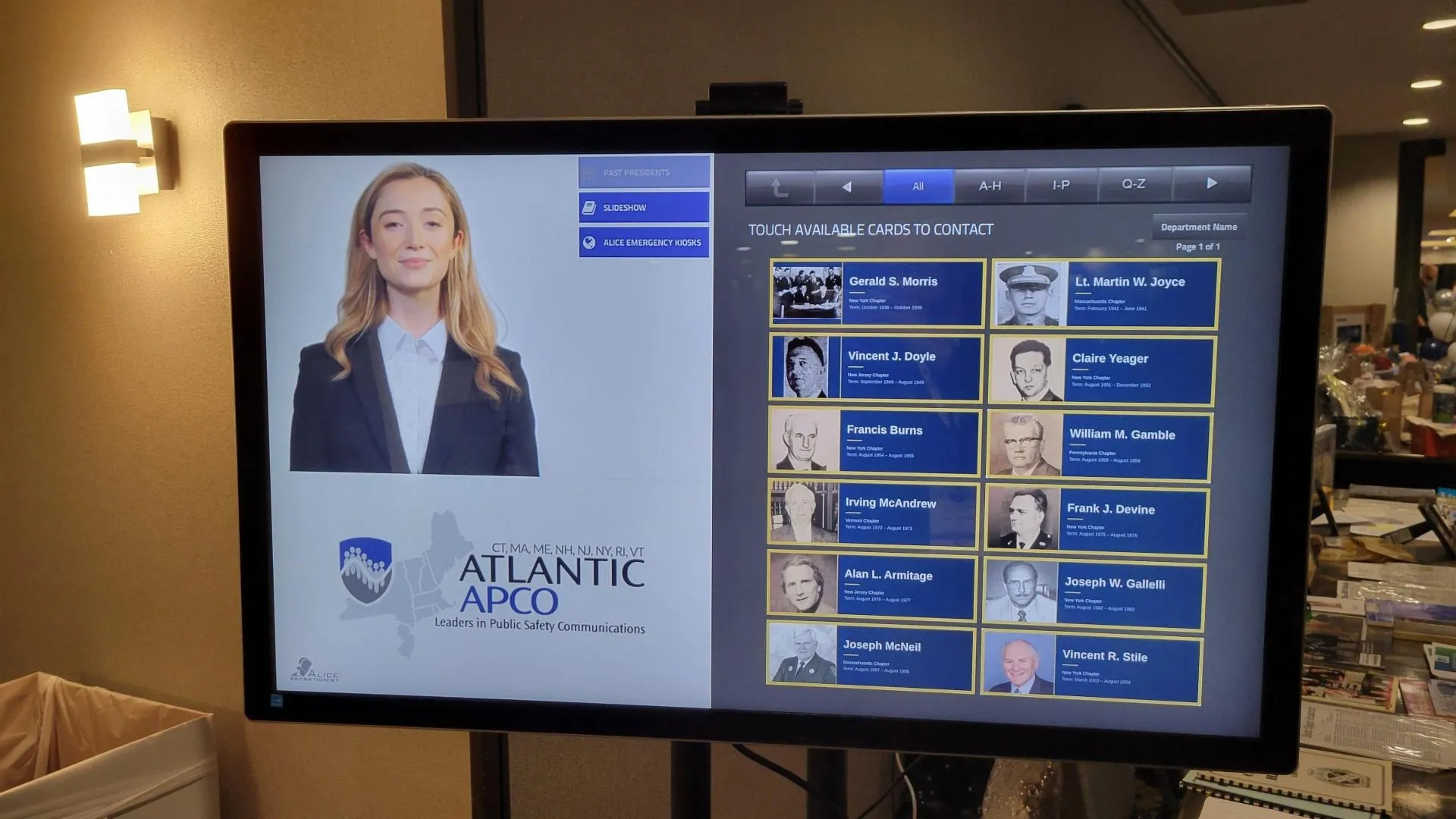
Our second kiosk lived somewhere a little different: the chapter’s history booth. There, it served as an interactive information display celebrating the Atlantic Chapter’s past presidents.
Attendees could browse the leaders who have guided the chapter over the decades. They could also read news articles about each leader’s contributions to APCO and public safety communications. It was a great reminder that the same kiosk technology that connects a visitor to dispatch can also inform, engage, and tell a story. For longtime members, it was a chance to revisit the colleagues and mentors who shaped their careers.
We are grateful to the chapter for the opportunity to help honor the people who built this community.
Thank You, APCO Atlantic
Thank you to the conference committee, volunteers, and every dispatcher who stopped by to talk with us. The conversations about accessibility, lobby safety, call routing, and staffing gaps will shape how we continue to support public safety agencies.
See ALICE’s Police Lobby Kiosks in Action
Is your department facing reduced front desk hours, lobby security concerns, or ADA accessibility requirements? We would love to show you how a police lobby kiosk can help.
Frequently Asked Questions
A police lobby kiosk is a public safety kiosk that lets anyone who walks into a police or fire station reach help on their own. Visitors use a touchscreen to connect with 911 dispatch, an on-call officer, or other staff by video or voice. ALICE Receptionist provides police lobby kiosks for public safety agencies.
Yes. Emergencies connect straight to 911 dispatch. Everyday requests, such as records questions or paperwork pickups, go to the right staff member, so dispatchers stay focused on urgent calls.
In stations with a police lobby kiosk, residents can reach dispatch or an on-call officer by video or voice at any hour. Departments without a kiosk typically direct residents to a non-emergency phone line instead.
A police lobby kiosk can connect deaf and hard-of-hearing visitors with a live ASL interpreter over video or a dispatcher through TTY, so they can talk with dispatch in real time.
No. A police lobby kiosk connects visitors to the people who can help them rather than replacing those people. It covers the lobby when staff are unavailable and reduces interruptions for dispatchers by sending each visitor to the right person.
A kiosk lets visitors explain their needs while staff remain behind secured doors or glass. Staff can see who is in the lobby before opening a door. When the kiosk is connected to the station’s access control system, staff can verify a visitor before releasing a secured door.