

Table of contents
- Why Peak Hours Create Lobby Bottlenecks in Clinics
- How the Patient Arrival Experience Impacts Perceived Wait Times
- The Role of Automation in Improving Patient Flow During Peak Hours
- Using Digital Patient Check-In to Reduce Uncertainty
- Improving the Patient Check-In Process Without Adding Staff
- Create a Calm, Consistent Patient Check-In Experience
- Frequently Asked Questions
- Creating a Calm Patient Check-In Experience—Even During Peak Hours
- Ready to take the stress out of peak-hour patient check-in?
Peak arrival times are a reality for clinics and outpatient centers. Morning appointments, lunch-hour visits, and after-work check-ins often create predictable surges in patient volume. When arrivals spike, patient services teams are expected to keep the lobby calm, the line moving, and patients supported—often without additional staff.
The good news: improving the patient check-in process during peak hours doesn’t require hiring more people. It requires reducing uncertainty, standardizing instructions, and supporting staff with the right tools.
Patient check-in during peak hours refers to how clinics manage arrival surges using clear instructions, standardized workflows, and timely staff notifications without increasing front desk workload.
Why Peak Hours Create Lobby Bottlenecks in Clinics
During peak hours, even well-run clinics can experience bottlenecks. Patients arrive with questions, paperwork, and varying levels of stress. At the same time, front desk teams are balancing phone calls, administrative tasks, and in-person interactions.
Without a clear, consistent check-in process, clinics often see:
- Confusion about where to go or what to do next
- Long or uneven lines forming in the lobby
- Frequent interruptions at the front desk
- Delays in notifying clinical teams that patients have arrived
These issues compound quickly, making it harder to maintain a calm, organized environment.
How the Patient Arrival Experience Impacts Perceived Wait Times
The patient arrival experience sets the tone for the entire visit. When patients are unsure what to do next, even short waits can feel longer. Uncertainty increases anxiety and frustration, especially during busy periods.
Clear instructions upon arrival reduce perceived wait times by:
- Reassuring patients they are in the right place
- Setting expectations for next steps
- Eliminating repeated questions in the lobby
When patients feel guided rather than ignored, the entire check-in experience feels smoother even when patient volume is high.
The Role of Automation in Improving Patient Flow During Peak Hours

Peak hours expose how much time front desk teams spend on repeatable tasks. Automating routine steps in the patient check-in process helps clinics improve patient flow without removing the human element.
Automation can support patient services teams by:
- Proactively greeting patients
- Handling basic self check-in steps
- Collecting essential information
- Automatically notifying staff when patients arrive
By reducing repetitive work, teams can focus on patients who need personal assistance, rather than managing lines and interruptions.
Using Digital Patient Check-In to Reduce Uncertainty
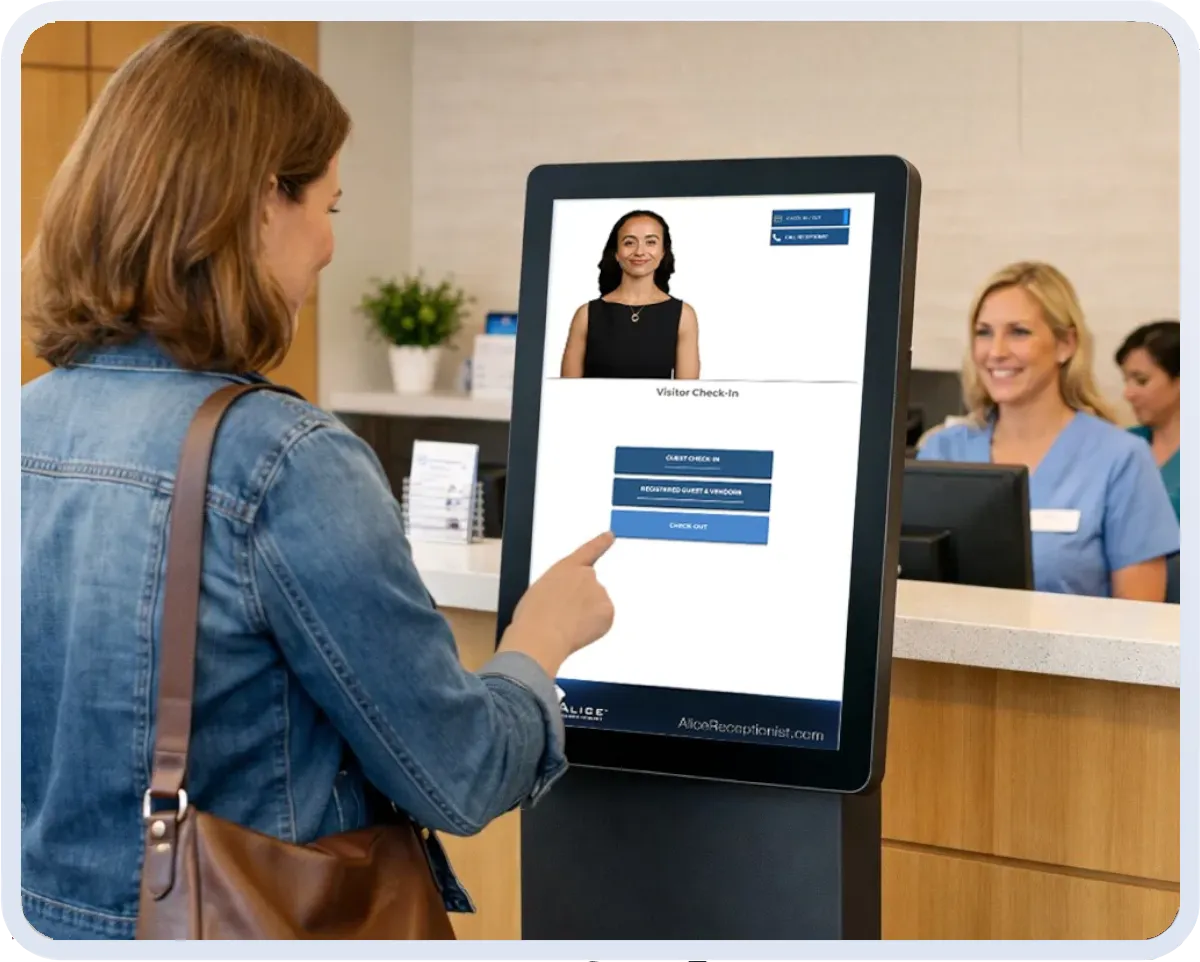
Digital patient check-in provides patients with clear, step-by-step guidance as soon as they arrive. Whether through a kiosk or tablet, self-service check-in helps patients move forward confidently without waiting for staff availability.
A well-designed patient self-check-in experience:
- Reduces “What do I do next?” moments
- Keeps arrival instructions consistent across shifts
- Supports faster handoffs from lobby to care teams
During peak hours, this consistency is key to keeping the lobby calm and predictable.
Improving the Patient Check-In Process Without Adding Staff
Peak hours don’t have to feel chaotic. By standardizing arrival instructions, automating repetitive tasks, and enhancing staff visibility, clinics can streamline the patient check-in process while maintaining a welcoming, supportive experience.
For patient services teams, a calm check-in experience isn’t about doing more. It’s about removing friction where it doesn’t belong.

Book a Demo
Create a Calm, Consistent Patient Check-In Experience
Get a personalized look at how ALICE helps patient services teams deliver a welcoming, organized check-in experience, especially during peak arrival times, while reducing front desk workload.
Frequently Asked Questions
Patient services leaders often ask practical questions about managing peak-hour check-in. Here are a few common ones.
What causes bottlenecks during patient check-in?
Bottlenecks often occur when arrival instructions are unclear, staffing fluctuates, or repeatable tasks rely entirely on front desk staff during peak hours.
How can clinics reduce front desk workload during busy periods?
Clinics can reduce workload by automating routine check-in steps, standardizing arrival instructions, and providing staff with real-time visibility into patient arrivals.
Does digital patient check-in replace front desk staff?
No. Digital patient check-in supports staff by handling repeatable tasks, allowing teams to focus on patients who need personal assistance.
Creating a Calm Patient Check-In Experience—Even During Peak Hours
Improving the patient check-in process during peak hours doesn’t require hiring more people. It requires reducing uncertainty, standardizing instructions, and supporting staff with the right tools.
Ready to take the stress out of peak-hour patient check-in?
Schedule a Live Demo Today to see how ALICE supports clinics and outpatient centers using check-in workflows, staff notifications, visitor logs, and optional security screening.